


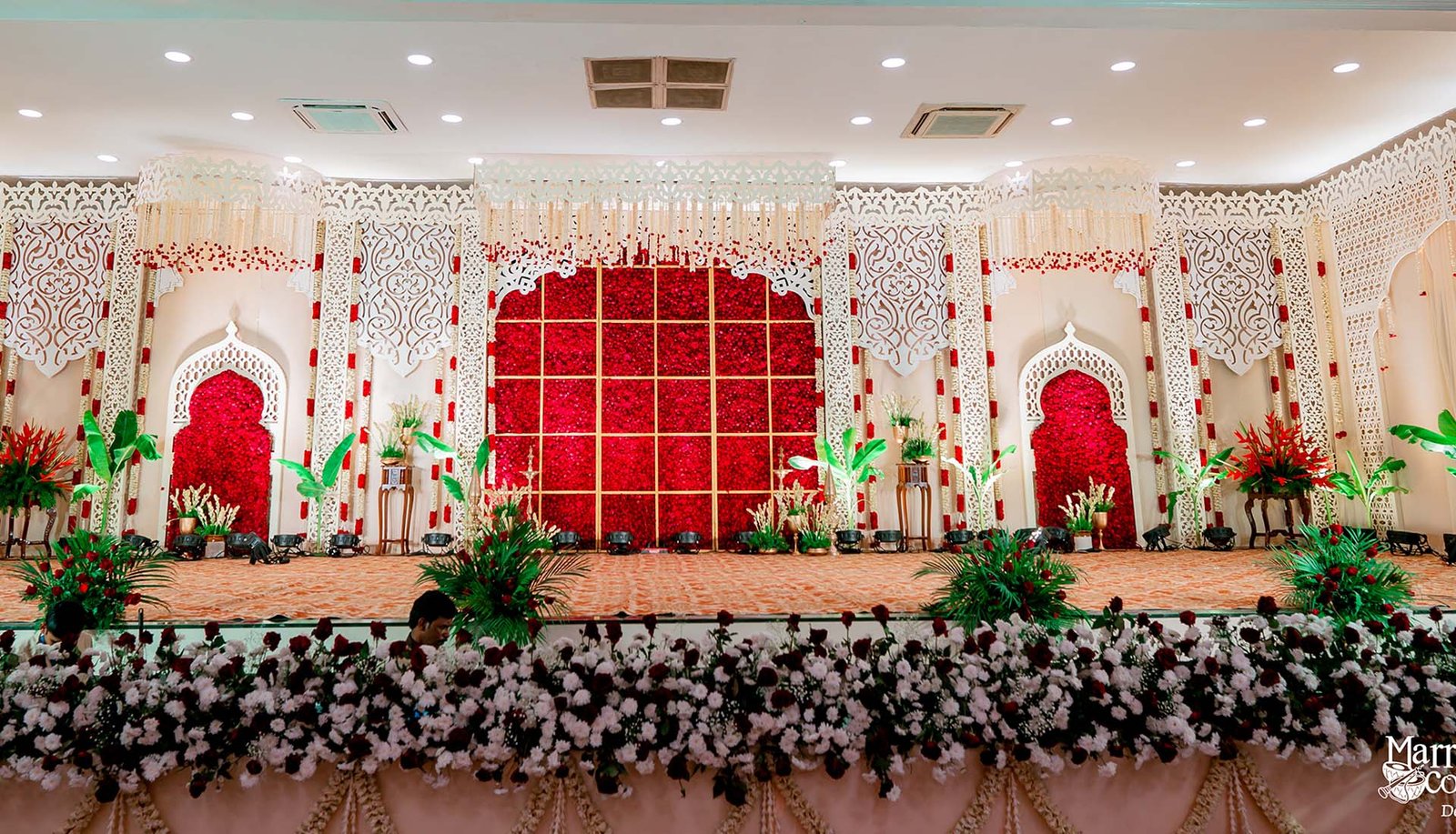
In the time it takes to read this article, approximately 100 Indian couples are getting married. By the end of today, nearly 18,000 weddings will have taken place across India. By the end of this year, roughly 3.65 million marriages will be solemnized, each one a celebration, each one a transaction, each one part of an economic phenomenon so vast that it rivals entire national economies.
India’s wedding industry is not merely a social phenomenon or cultural tradition. It is the fourth-largest industry in the nation, a $130 billion annual powerhouse that dwarfs India’s entire automobile sector, exceeds the GDP of countries like Chile or Pakistan, and has become one of the most significant drivers of quarterly economic growth.
During just 45 days this winter—November 1 to December 14, 2025—46 lakh weddings are projected to inject ₹6.5 lakh crore into the Indian economy. To contextualize this: that’s $7.8 billion in just 45 days, an average of $173 million per day, flowing through jewelry stores, catering companies, venue halls, tailor shops, florists, photographers, musicians, and countless other vendors across India.
This is not celebratory excess or frivolous spending. This is the economic engine that powers Q3 growth, that creates livelihoods for millions, that has evolved from seasonal tradition into a year-round commercial juggernaut.
The Magnitude: When Weddings Become Economics
Understanding the scale of India’s wedding industry requires abandoning the notion that this is merely a niche sector. Wedding spending in India operates at a level of economic significance that demands serious analysis.
The Numbers That Defy Intuition
Consider these facts: India hosts 8-10 million weddings annually. This is not a rounding quirk; it means that on average, 22,000-27,000 Indian weddings occur every single day of the year, every year.
The $130 billion annual spend translates to approximately ₹10.79 lakh crore—a figure that exceeds the annual expenditure on food and grocery ($84 billion) in many people’s estimates but trails only food & grocery ($681 billion) when compared to specific consumption categories.
Most starkly: the average Indian spends twice as much on their wedding as on their entire education from pre-primary through graduation. This isn’t cultural extravagance; it’s reflective of how central weddings are to Indian society and how resources are allocated accordingly.
The average wedding expenditure of ₹12-15 lakh represents approximately 5 times India’s per capita GDP of $2,900 (₹2.4 lakh) and more than 3 times the average annual household income. Put differently: an average middle-class Indian wedding costs the equivalent of 3-5 years of household income.
Global Context: India’s Wedding Supremacy
On the global stage, India’s wedding industry ranks second only to China, which operates a $170 billion wedding market. The United States, with a $70 billion wedding market, ranks third despite having significantly higher per-capita incomes.
What’s remarkable isn’t just the size but the per-capita intensity. American couples spend roughly $28,000 per wedding on average, while Indian couples spend $15,000. But India’s population of nearly 1.4 billion and cultural emphasis on elaborate weddings creates a market with approximately 130% of America’s annual wedding expenditure.
India has effectively created a wedding economy of proportions that wealthy Western nations have never achieved. And this economy is growing faster than the overall economy, faster than most consumption categories.
Where Does All the Money Go? The Spending Breakdown
The ₹6.5 lakh crore injected during the 2025 peak season doesn’t evaporate into abstract categories. It flows through specific, measurable sectors, creating winners and growth stories across the economy.
Jewelry: The Crown Jewel at 15% of Spending
No category dominates Indian wedding spending like jewelry. Approximately 15% of all wedding expenditure—roughly ₹1 lakh crore annually—flows into jewelry, primarily gold and diamonds.
This isn’t incidental spending. Wedding jewelry demand comprises 50-55% of all annual gold jewelry demand by weight in India. When India’s gold jewelry market approaches $70 billion annually (and is projected to reach $124 billion by 2027), weddings aren’t just a segment—they’re the primary driver.
Listed companies like Titan, Senco Gold, and Kalyan Jewellers have built their growth narratives directly on this wedding-driven demand. Between FY20 and FY24, these companies saw gold jewelry revenue grow at CAGRs of 16-24%, with wedding jewelry accounting for 55% of growth.
The psychology of wedding jewelry is distinctive. It’s perceived as investment-grade—an asset that will retain or appreciate value rather than being consumed. This perception drives couples and families to allocate substantially more to jewelry than to other wedding categories, even when budget constraints exist.
Catering: The Second Pillar at $24-26 Billion
Catering—the food, beverages, and service involved in feeding wedding guests—represents the second-largest spending category, accounting for approximately $24-26 billion of the $130 billion total.
This category has evolved substantially. Where Indian weddings once meant simple vegetarian feasts, modern weddings increasingly feature multi-cuisine menus, curated by specialized chefs, served across multiple functions (pre-wedding, mehendi, sangeet, reception), at luxury hotel venues.
A mid-level wedding with 500 guests at ₹2,000 per plate translates to ₹10 lakh just for catering. Luxury weddings with customized menus and premium venues can spend ₹20-50 lakh on food alone.
Events, Décor, and Entertainment: The Experience Spend at $18-20 Billion
Event management, decoration, flowers, lighting, entertainment, and staging collectively represent $18-20 billion, reflecting the increasing professionalization and elaboration of wedding ceremonies.
Where weddings once featured standardized mandaps and traditional setups, modern Indian weddings increasingly involve themed décor, professional event management, specialized lighting design, and elaborate entertainment.
The per-wedding investment in décor and events has increased dramatically. A wedding that might have cost ₹5 lakh for event management in 2010 might cost ₹15-25 lakh today as couples invest in personalized experiences and Instagrammable aesthetics.
Photography, Apparel, and Miscellaneous: Completing the Picture
Photography and videography consume $10-12 billion, driven by the professionalization of wedding documentation and the rise of cinematography-grade wedding films.
Wedding apparel and accessories (primarily women’s wear, from bridal lehengas to blouses) account for approximately $9-10 billion, with women’s wear comprising 70-75% of the wedding apparel market.
The remaining $20-25 billion encompasses makeup services, transportation, accommodations for guests, pre-wedding events, and miscellaneous expenses.
Spending Distribution: The Middle Class Subsidizes the Industry
An illuminating pattern emerges when examining who spends and how much: the middle class (51% of all weddings) accounts for 63% of total spending.
In contrast, elite weddings (1% of total count) contribute 12% of total spend, while the lowest-spending 17% of weddings contribute just 4% of total spend.
This means the industry is essentially subsidized by middle and upper-middle-class aspirational spending—families investing disproportionate percentages of their income to create memorable, high-status wedding events.
The Luxury Paradox: When 1% of Weddings Drive Disproportionate Growth
Elite weddings represent a tiny fraction of events—approximately 1% of the 10 million annual ceremonies—yet they’ve become disproportionately influential in shaping industry trends and growth narratives.
The Economics of Ultra-High-End Weddings
An elite wedding costs approximately ₹1 crore ($120,000), compared to ₹12-15 lakh for average and ₹3-5 lakh for budget weddings. This roughly 7-10x multiplier creates outsized revenue impact despite representing minimal event count.
These ultra-premium weddings feature:
- Multiple pre-wedding events (sangeet, mehendi, bride/groom showers) spanning weeks
- Luxury accommodations for hundreds of guests at five-star hotels
- Celebrity entertainment and live performances
- Designer wedding apparel
- Multi-course customized catering
- Professional cinematography and photography teams
- Elaborate theme décor and lighting
- International destinations or destination properties within India
For context: when celebrities get married, the event often generates ₹50 crore to ₹200 crore in spending (including all associated costs), with some high-profile international celebrity weddings reaching ₹300+ crore.
How Luxury Weddings Drive the Narrative
Despite their small numerical footprint, luxury weddings shape how the industry sees itself and markets itself. Bollywood celebrity weddings, influencer destination weddings, and wealthy industrialist ceremonies dominate media coverage and create aspirational benchmarks.
This visibility has consequences: it elevates expectations and spending thresholds across middle-class and aspirational segments. A middle-class couple, seeing celebrity weddings featuring destination locations, international guests, and elaborate entertainment, increasingly feels their own event falls short unless it incorporates at least some of these premium elements.
The result is what analysts call “premiumization”—the gradual migration of spending from basic categories toward luxury and experiential categories. Couples are spending less on certain basics but significantly more on experiences, personalization, and premium services.
Destination Weddings: The Fastest-Growing $3.5 Billion Segment
Perhaps no wedding segment is growing faster or attracting more investment than destination weddings—ceremonies held not in couples’ hometowns but in deliberately chosen exotic or scenic locations.
The Explosive Growth Trajectory
The destination wedding segment, valued at $3.5 billion in 2024, is projected to reach $25.7 billion by 2033—a 22.1% CAGR, far exceeding the overall wedding industry growth rate of 14.3%.
This acceleration is driven by multiple factors: rising disposable incomes among affluent Indians, the influence of social media showcasing elaborate destination events, the growth of affordable air travel making distant locations accessible, and the development of luxury hospitality infrastructure in scenic locations.
The Geography of Destination Weddings
Beach and island destinations (Goa, Kerala, Andaman Islands) currently lead with 33.21% of destination wedding revenue. The combination of scenic beauty, resort infrastructure, and relaxation-conducive ambience makes these locations attractive for multi-day wedding events.
Hill stations and mountain locations (Shimla, Mussoorie, Manali, Uttarakhand, Himachal Pradesh) represent the fastest-growing segment at 16.4% CAGR. These cool-weather, panoramic-view locations appeal to couples seeking nature-centric, experiential celebrations distinct from traditional setups.
Royal heritage properties and palaces have emerged as another popular segment, with families leasing historic properties for multi-day wedding events, combining cultural authenticity with luxury hospitality.
The “Wed in India” Campaign Impact
Prime Minister Narendra Modi’s “Wed in India” campaign has accelerated this trend. Rather than couples traveling abroad for destination weddings (traditionally to places like Lake Como in Italy, Cappadocia in Turkey, or Bali in Indonesia), the campaign encourages domestic destination weddings.
The initiative has proven effective. Uttarakhand, Rajasthan, Gujarat, and other states have invested in tourism infrastructure and promoted themselves as wedding destinations. The result: a dramatic shift from international destination weddings to premium domestic destinations.
This shift doesn’t reduce spending; it potentially increases it by incorporating more Indian businesses in the value chain. A destination wedding that previously would have spent 80% of its budget abroad now spends it domestically—benefiting Indian hotels, caterers, decorators, photographers, and service providers.
Employment: How Millions Depend on Weddings
The wedding industry’s economic significance extends beyond revenue figures to employment impact. This sector, more than most, creates direct and indirect livelihoods for millions of Indians.
The Numbers: Direct and Indirect Employment
India’s wedding industry generates approximately 10 million jobs across direct and indirect employment. Each wedding involves 150-200 workers—planners, coordinators, photographers, videographers, caterers, decorators, florists, musicians, makeup artists, jewelry sellers, tailors, and transportation providers.
When 46 lakh weddings occur over 45 days in peak season, the industry mobilizes over 6-9 crore worker-days of employment.
Beyond these direct numbers, the wedding industry contributes approximately 4.08% to total Indian economic activity, a figure comparable to entire sectors like IT or pharmaceuticals.
Employment Beyond Major Cities
Critically, wedding industry employment isn’t concentrated in metros or urban centers. It’s distributed across thousands of small towns, semi-urban areas, and rural regions.
A small-town tailor, jeweler, caterer, florist, or photographer may not have consistent year-round income, but wedding seasons—particularly the Oct-Dec peak—provide substantial seasonal employment and revenue.
For workers in artisanal and traditional services—wooden furniture makers, textile workers, traditional musicians—weddings have historically been the primary market.
The Digital and Service Provider Boom
The professionalization of weddings has created entirely new categories of employment: wedding planners, event coordinators, wedding photographers, video editors, wedding videographers, makeup artists, drone operators, wedding app developers, and wedding consultants.
Many of these roles didn’t exist 15-20 years ago. Today, they represent vibrant employment categories with substantial earning potential.
Regional Economic Impact: When Delhi Makes ₹1.8 Lakh Crore
Wedding spending isn’t evenly distributed across India. Certain regions dominate due to population concentration, economic development, and wedding season timing.
Delhi’s Dominance
In the Nov-Dec 2025 peak season alone, Delhi is projected to host 4.8 lakh weddings generating ₹1.8 lakh crore—roughly 28% of the national ₹6.5 lakh crore total.
This concentration reflects Delhi’s status as India’s capital, its concentration of affluent and upper-middle-class residents, the dense population of the National Capital Region, and the region’s prominence in determining national trends.
Delhi’s hotels, venues, caterers, and service providers depend heavily on wedding season. The revenue generated during these 45 days often determines whether hospitality businesses have profitable years.
Regional Variations in Spending Patterns
Beyond volume, spending patterns vary by region. Rajasthan and Gujarat see elevated destination wedding spending. Uttar Pradesh and Punjab report higher spending on traditional catering and event setups. Southern states emphasize temple and heritage weddings, creating demand for traditional crafts and local artisans.
These regional variations mean the wedding industry’s employment and revenue impact spreads across diverse geographies and business types, preventing concentration and allowing both large corporations and small vendors to participate.
The Seasonal Challenge: From Auspicious Dates to Year-Round Business
Historically, Indian weddings were concentrated in “auspicious seasons”—traditionally October through February, when planetary alignments and Hindu calendar considerations were favorable.
This created the wedding industry’s original structural problem: extreme seasonality. Vendors faced months of intensive activity followed by months of zero demand.
The Evolution: From Seasonal to Year-Round
Over the past 5-10 years, this has shifted dramatically. Prime Minister Modi’s campaigns, changing attitudes among urban millennials who question astrological scheduling, and the diversification of destination wedding locations with optimal weather throughout the year have flattened the seasonal peaks.
Monsoon weddings in July-August, summer weddings in March-May, and autumn weddings in September now regularly occur alongside traditional peak-season events.
The result: what was historically a feast-or-famine seasonal business has evolved into a year-round, though still somewhat cyclical, industry.
For vendors, this evolution means more stable employment but also more competition—instead of dominating December, vendors now compete across all months.
For the economy, year-round wedding spending means more consistent consumer demand throughout the year rather than concentrated quarterly impacts.
Sectoral Winners: Which Industries Benefit Most?
Wedding spending cascades through multiple industries, creating winners and growth drivers.
Jewelry: The Primary Beneficiary
The jewelry sector, particularly gold jewelry, receives the most direct and substantial benefit. As wedding-driven demand represents 50-55% of annual gold jewelry demand, the sector’s annual growth heavily correlates with wedding trends.
Companies like Titan, Kalyan Jewellers, and Senco Gold have built their growth narratives directly on wedding demand.
Apparel and Fashion
Wedding and celebration wear comprises approximately 11% of India’s $84 billion apparel retail market, with women’s wear dominating. Companies like Vedant Fashions (Manyawar), Aditya Birla Fashion & Retail, Raymond, and Arvind Fashions benefit from wedding-driven demand.
Hotels and Hospitality
The rise of destination weddings has created substantial demand for premium hotel accommodations, venue spaces, and hospitality services.
Hotels near popular destination wedding locations have positioned themselves as wedding specialists, creating revenue streams that would be impossible without destination wedding demand.
Technology and Digital Platforms
The emergence of wedding tech platforms—WedMeGood, Weddingz, WeddingBazaar—has created entirely new industries around digital wedding planning, vendor aggregation, and guest management.
The Future: $290 Billion by 2030
Current projections suggest the Indian wedding industry will reach ₹24.04 lakh crore (approximately $290 billion) by 2030, growing at 14.3% CAGR.
What Drives This Growth?
Several factors support continued rapid expansion:
Volume Stability: While some might expect wedding counts to decline as India develops, they’ve remained surprisingly stable at 8-10 million annually.
Premiumization: Average spending per wedding is increasing 6% annually from growth in real purchasing power plus inflation.
Organized Market Growth: Currently, only 13% of the wedding industry is “organized” (involving registered businesses, GST compliance, transparent transactions). As this increases to 28% by 2030, revenue growth will accelerate.
Rising Incomes: As personal incomes grow, disposable spending on weddings increases faster than overall income growth.
Credit Accessibility: RBI data shows personal loan disbursements for weddings increased 23% year-on-year, indicating easier access to credit for wedding spending.
Conclusion: Love and Livelihoods
India’s wedding industry transcends the romantic and sentimental into something profoundly economic. It’s not merely that Indians love weddings; it’s that the wedding industry has become a structural component of India’s economy, creating employment for millions, generating quarterly GDP growth, and providing livelihoods that ripple from major cities to small towns.
The ₹6.5 lakh crore flowing through the economy during the 45-day Nov-Dec 2025 peak season isn’t frivolous luxury spending. It’s economic activity—money paid to workers, vendors, businesses, and service providers who depend on weddings for substantial portions of their annual income.
A tailor in Gujarat, a florist in Goa, a caterer in Delhi, a jewelry maker in a small town—all of their livelihoods are structured around India’s wedding economy.
As India develops further and incomes rise, weddings aren’t declining in economic significance; they’re evolving and expanding. What once meant traditional ceremonies in hometowns now encompasses destination experiences, luxury personalization, and multi-million-rupee productions.
By 2030, if projections hold, India’s wedding industry will generate ₹24 lakh crore annually—more than India’s entire current IT sector. It will employ more people than many entire industries, create livelihoods across regions and classes, and drive substantial quarterly economic growth.
The “Big Fat Indian Wedding” isn’t merely cultural tradition or romantic excess. It’s an economic engine of global proportions, one that transforms individual life milestones into national economic moments. Every wedding represents not just love between two people, but also employment for hundreds, revenue for thousands of businesses, and a measurable contribution to India’s GDP.
That’s an extraordinary economic phenomenon deserving serious attention.
About Finovest: Finovest.co.in explores how cultural, social, and personal financial decisions create broader economic impacts. We examine the intersection of tradition, consumption, and economic growth in India.
Disclaimer: This article is for informational and analytical purposes. The data presented represents estimates and projections based on available market research and surveys. Actual spending may vary significantly across regions and individual circumstances. All information is based on sources believed reliable as of publication date, but accuracy is not guaranteed.tum et eu.
