


Introduction: From PINs to fingerprints
For years, paying digitally has meant remembering yet another PIN or password – for cards, for net banking, for UPI. It is secure in theory, but in practice most of us reuse credentials, forget them, or type them into the wrong place when we are in a hurry. As scams evolve and the number of online transactions explodes, banks and regulators are increasingly asking a simple question: can we move beyond “something you know” to “something you are”?
Enter biometric payments. Whether it is unlocking a mobile wallet with your finger, approving UPI with face recognition, or tapping a card that reads your fingerprint instead of asking for a PIN, biometrics are quietly turning from futuristic add‑ons into everyday infrastructure. In India, the National Payments Corporation of India (NPCI) and the Reserve Bank of India (RBI) have already green‑lit on‑device fingerprint and face authentication for UPI as an alternative to entering a UPI PIN.
So, are “fingerprint wallets” – a catch‑all for phones, cards, and wearable devices that use your fingerprint to pay – really the future? This article unpacks how biometric payments work, why fingerprints are so popular, how India is adopting them, and what risks and trade‑offs investors and consumers should understand.
What exactly are biometric payments?
Biometric payments use your biological traits – such as fingerprints, face, iris, or even behavioural patterns – to verify that you are the legitimate account holder before authorising a transaction. Instead of typing a PIN or password, you touch a sensor or look at the camera; the system compares your live biometric to a stored template and, if it matches, the payment goes through.
Common biometric methods used in payments today include:
- Fingerprint recognition: The most widely adopted form, thanks to built‑in sensors on smartphones and emerging biometric payment cards.
- Facial recognition: Used by many mobile wallets, particularly on newer smartphones where face unlock is common.
- Iris or palm‑vein: Highly accurate but still niche, mostly in high‑security or specialised banking contexts.
In all these cases, the biometric is typically one factor in a two‑factor authentication setup: something you have (device/card) plus something you are (your fingerprint or face). The goal is to make payments both more secure and more convenient than password‑ or PIN‑based systems alone.
How fingerprint wallets work in practice
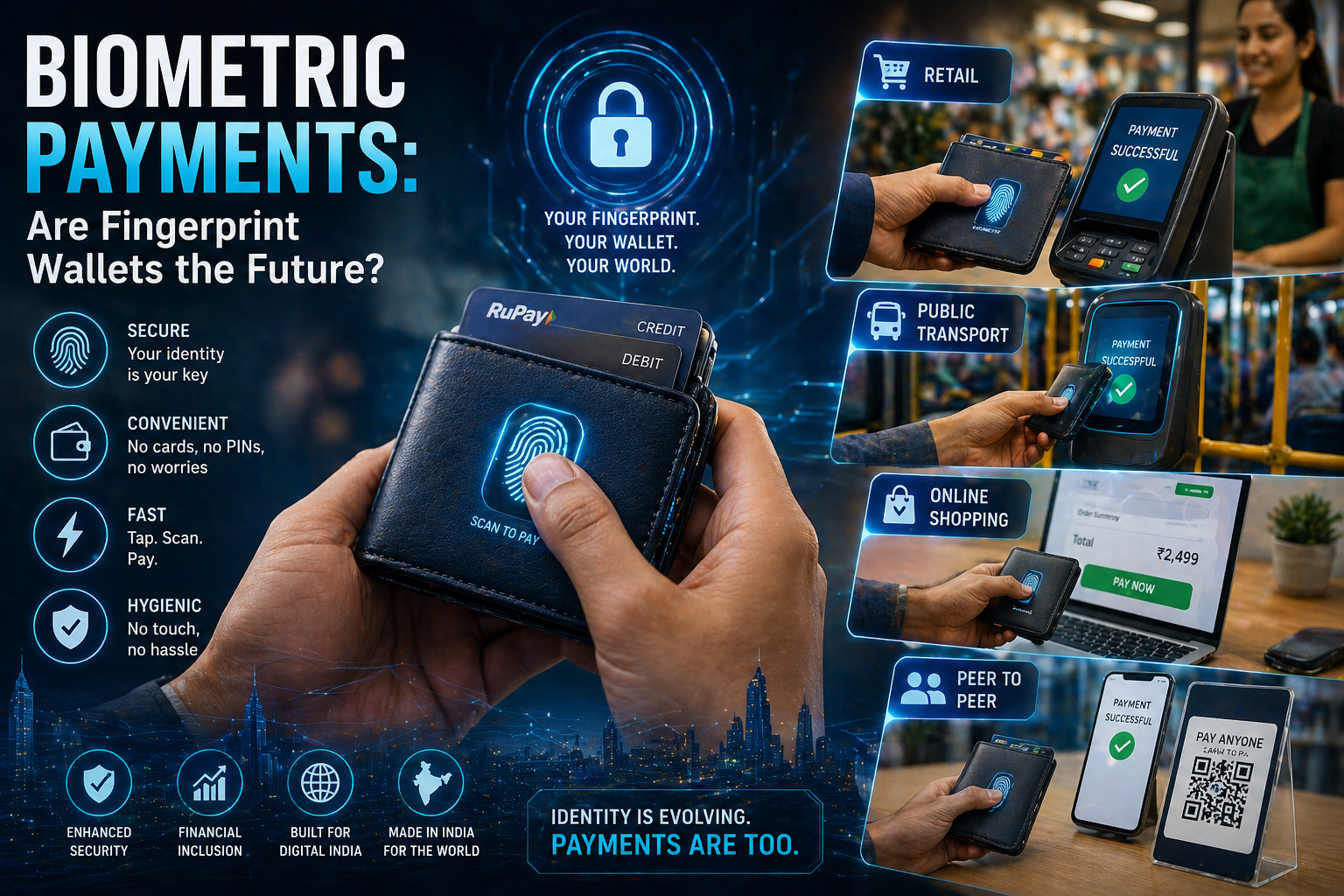
“Fingerprint wallets” is not a formal category, but it captures a few related experiences where your fingerprint replaces or supplements PINs and passwords.
1. Mobile wallets and UPI apps
If you use Apple Pay, Google Pay, Samsung Pay, or a UPI app on a modern smartphone, there is a good chance you already approve payments with a fingerprint.
- The phone stores a template of your fingerprint inside a secure hardware enclave when you enrol.
- When you pay, the sensor scans your finger and compares it locally to the stored template.
- If it matches, the device releases a cryptographic sign‑off to the payment app, which then completes the transaction with the issuer bank.
NPCI’s new UPI guidelines explicitly allow on‑device biometric authentication (fingerprint, face, etc.) as an optional replacement for entering the UPI PIN, initially for transactions up to a certain limit, such as ₹5,000. This means you can tap your UPI app, scan your finger, and pay without typing numbers.
2. Biometric payment cards
Biometric payment cards look like regular debit or credit cards, but include a tiny fingerprint sensor and secure chip.
- During activation, you enrol your fingerprint directly on the card; a template is stored securely on the card’s chip.
- At the point of sale, you place a finger on the sensor while tapping or inserting the card.
- The card compares the live fingerprint to the stored template; only if they match does it enable the EMV or contactless transaction.
The card itself does the biometric check, so it can work with existing payment terminals without major infrastructure changes. If the card is lost or stolen, it is effectively useless without the legitimate owner’s fingerprint.
3. Wearables and fingerprint devices
Beyond phones and cards, biometric wallets can take the form of smartwatches, rings and even smart glasses that use built‑in biometric sensors to authorise small payments. NPCI has already announced support for UPI on wearables and smart glasses, combining device binding with biometrics for hands‑free transactions.
Why fingerprints dominate biometric payments
While face and voice recognition get a lot of attention, fingerprints remain the workhorse of biometric payments.
A few reasons why:
- Mature technology: Fingerprint sensors and matching algorithms are well‑understood, cheap, and embedded in billions of devices.
- Consumer comfort: Surveys show fingerprints consistently rank among the most trusted and preferred biometric methods for in‑store and online payments.
- Speed and frictionless UX: Touch‑and‑pay feels faster and more natural than typing a PIN, especially for small, frequent transactions.
- Privacy by design (when done right): Modern standards like FIDO keep fingerprint templates stored locally on the device or card, never in a central server, reducing privacy and data‑breach risks.
A whitepaper on biometric smart cards notes that integrating fingerprint sensors into cards can remove the need for contactless payment caps and eliminate PIN entry while maintaining strong customer authentication. This combination of convenience and security is exactly what payment ecosystems are chasing.
The India story: UPI, Aadhaar and biometrics
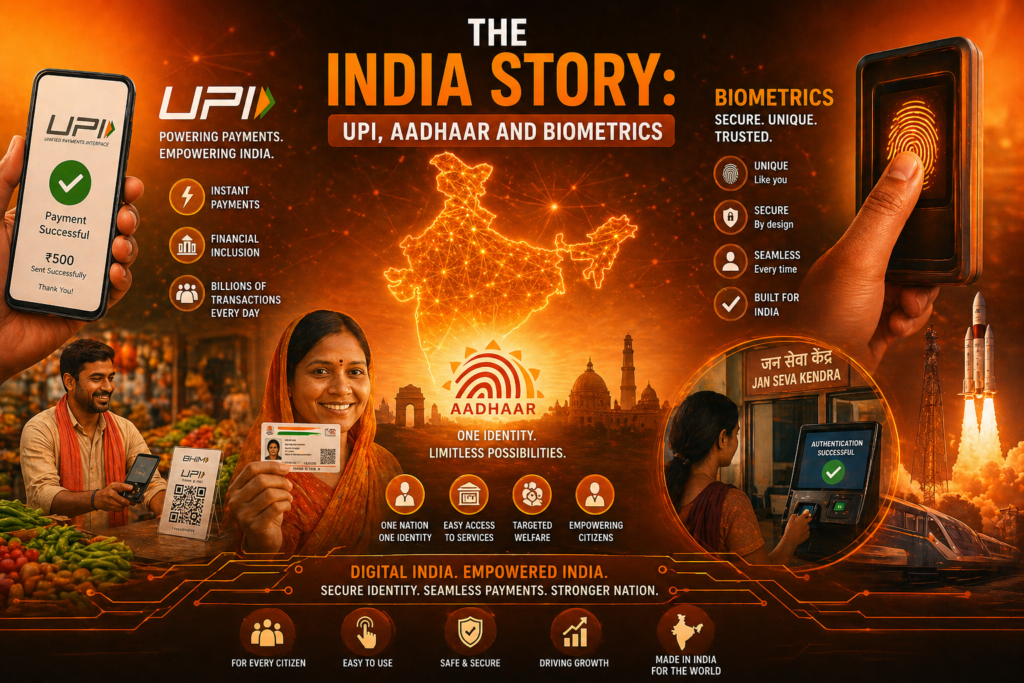
India is an especially interesting case because it already uses biometrics at scale in the form of Aadhaar authentication, and it has one of the world’s most advanced real‑time payment systems in UPI.
Aadhaar‑enabled Payment System (AePS)
AePS allows basic banking transactions – like balance checks, cash withdrawals and fund transfers – using just an Aadhaar number and fingerprint at micro‑ATMs or banking correspondents. RBI and NPCI have issued detailed guidelines to ensure strong KYC, secure transaction processes and strict data protection for these Aadhaar‑based, fingerprint‑authenticated transactions.
AePS has been crucial for financial inclusion, allowing people in rural and remote areas to transact without cards or smartphones, but it has also highlighted the importance of robust biometric security and user awareness to prevent misuse.
Biometric UPI: Fingerprint instead of PIN
In 2025, NPCI announced additional authentication methods for UPI, including:
- On‑device biometric authentication (fingerprint, face, etc.) for UPI transactions instead of entering a UPI PIN, initially capped at lower transaction amounts.
- Aadhaar‑based face authentication to set or reset UPI PINs, simplifying onboarding for users without convenient access to cards or OTPs.
NPCI’s circular on additional authentication methods lays out operational rules, such as:
- Biometric authentication is optional and requires explicit customer consent, which can be withdrawn at any time.
- Biometric authentication is disabled if the UPI PIN is changed or reset, until fresh consent is obtained.
- New consent is required if you change devices (re‑binding) or stay inactive via this method for an extended period.
These safeguards aim to balance convenience with control, allowing users to opt into biometric payments without being locked in.
Security: Stronger than PINs, but not magic
On paper, biometric payments are more secure than PIN‑based systems because they tie transactions to a unique human trait rather than a code that can be guessed, stolen or shared. In practice, the picture is more nuanced.
Security advantages
- Harder to share or steal: You can tell someone your PIN; it is much harder to permanently share your fingerprint.
- Protection against credential theft: Many data breaches stem from stolen passwords; biometrics reduce reliance on these fragile credentials.
- Device‑bound security: In standards like FIDO, biometric templates never leave your phone or card; only a yes/no result or cryptographic signature is transmitted.
Case studies from payment providers adopting FIDO‑compliant biometric login show millions of users authenticating with a single fingerprint gesture while reducing risks like phishing and password reuse.
The risks and limitations
Biometrics are not a silver bullet.
- Spoofing and deepfakes: Early fingerprint sensors could be fooled by fake fingers, and modern facial systems face threats from high‑quality photos or AI‑generated deepfakes.
- Irreversibility: If your password leaks, you can change it. If your biometric template is compromised, you cannot change your fingerprints.
- Template security: The key question is where the biometric template is stored and how it is protected. Locally, on‑device storage is safer; centralised databases are more attractive targets for attackers.
Security experts emphasise that biometrics should be part of a layered approach, combined with device binding, risk analytics and fraud monitoring, rather than the only line of defence.
Pros and cons of fingerprint wallets
To make this concrete, here is a quick comparison of fingerprint‑based payments versus traditional PIN‑based methods.
| Aspect | Fingerprint wallets (biometric) | Traditional PIN/password |
|---|---|---|
| Convenience | Fast, no need to remember or type codes; one touch approval | Requires remembering and typing PINs/passwords for each service |
| Security | Ties transaction to a unique trait; passwords not exposed; works well with FIDO/local storage | Vulnerable to shoulder surfing, keylogging, phishing, and reuse across sites |
| Privacy risk | Depends on implementation; low if template stays on device/card, higher if centralised | PINs themselves carry limited biometric privacy risk, but credential databases are frequent breach targets |
| Recovery | Hard to change if biometric template is compromised | Easy to reset/change PIN or password |
| Inclusion & accessibility | Great for users with low literacy or difficulty handling PINs; may exclude users with worn prints or certain disabilities | Familiar concept; may be harder for elderly or low‑literacy users to manage multiple PINs |
The trade‑off is clear: biometric wallets can dramatically improve user experience and reduce certain types of fraud, but they demand strong governance and technical design to manage privacy and irreversibility risks.
Where fingerprint wallets shine
There are specific scenarios where fingerprint‑based payments and wallets make especially strong sense.
1. Small, frequent transactions
For daily purchases – groceries, cabs, coffee – the mental friction of PIN entry adds up. Biometric UPI and card payments enable tap‑and‑touch experiences that feel almost as effortless as paying with cash, with far better traceability.
Regulators often combine this with transaction caps, allowing biometric‑only flows for low‑value payments while requiring extra authentication for larger amounts. This preserves convenience where it matters most while containing risk.
2. Financial inclusion and elderly users
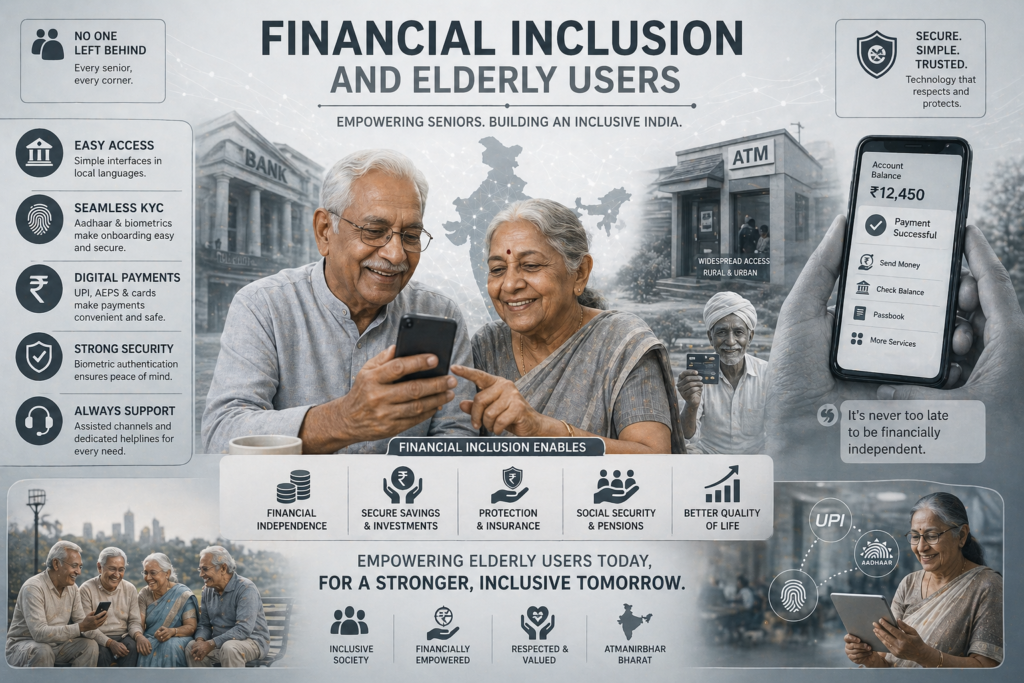
Biometrics can be a game‑changer for populations less comfortable with traditional credentials.
- AePS has already shown that fingerprint‑based authentication helps villagers and low‑literacy users access banking services without cards or PINs.
- NPCI notes that Aadhaar‑based facial authentication for UPI PIN can make onboarding easier for senior citizens and first‑time users without easy card access.
Fingerprint wallets on low‑cost devices, combined with UPI and AePS rails, can thus widen access while keeping fraud in check.
3. Card‑present transactions and contactless caps
Biometric payment cards promise to remove or raise contactless “tap without PIN” caps, since every transaction can be fingerprint‑verified. That means consumers can enjoy the speed of contactless for higher amounts without worrying that a lost card will be misused for multiple small taps.
The challenges ahead
Despite the promise, there are real hurdles on the road to widespread fingerprint wallets.
1. Cost and infrastructure
Biometric cards are more expensive to produce than traditional EMV cards because they include sensors, secure elements and more complex manufacturing processes. While costs are falling, early deployments are often targeted at premium or niche segments rather than mass‑market issuance.
On the mobile side, older or low‑end devices may not have secure, standards‑compliant fingerprint sensors, and some may be vulnerable to rooting or malware. Guidelines from NPCI and RBI require banks and UPI apps to enforce device‑compatibility checks and security requirements before enabling biometric authentication.
2. Privacy and consent
For biometrics to be trustworthy, users must be confident that:
- Their fingerprints are not being stored in large, hackable central databases without consent.
- Their biometric data will not be repurposed for surveillance or profiling.
UPI’s biometric framework and AePS both emphasise explicit opt‑in, clear disclosures, and the right to continue using PIN‑based methods instead. But building and maintaining public trust will require continuous transparency and strong enforcement of data‑protection norms.
3. Evolving fraud techniques
As more banks adopt biometrics, criminals are evolving too.
- Deepfakes and synthetic identities can attempt to bypass facial recognition.
- Presentation attacks (using fake fingers or masks) and injection attacks (feeding crafted signals directly into sensors) are active areas of concern.
Security bodies and alliances like FIDO respond with advanced liveness detection, secure hardware, and fraud analytics that analyse behaviour around transactions to flag anomalies. This is an arms race, and any narrative that suggests biometrics are “unhackable” is misleading.
Are fingerprint wallets really the future of payments?
So, will we all abandon PINs and passwords in favour of fingerprint wallets? The likely answer is more nuanced: biometrics will become the default front door for many payments, but not the only lock on the house.
Trends pointing toward a biometric‑heavy future include:
- Rising consumer comfort with unlocking devices and apps using fingerprints and faces.
- Regulatory support for strong customer authentication that combines possession (device/card) with inherence (biometric), as seen in India’s UPI and AePS guidelines and in global standards.
- Growing bank adoption of biometric methods as part of multi‑factor, risk‑based authentication strategies.
At the same time, PINs and passwords are unlikely to disappear completely. They will continue to serve as backup methods, fallbacks for devices without biometric support, and additional layers for high‑value or high‑risk transactions.
Most likely, the “future of payments” will look like:
- Device‑bound biometric approval for everyday transactions.
- Risk‑based step‑up checks – sometimes adding PINs, OTPs, or security questions – when something looks unusual.
- Strong standards like FIDO ensuring that biometric templates stay local and that users can switch devices and methods without losing control.
In this hybrid world, fingerprint wallets will play a central role, but alongside other biometrics, behavioural analytics, and evolving fraud‑detection tools.
How consumers and investors should think about biometric payments
For everyday users, the practical takeaways are straightforward:
- Use biometric payments on trusted devices and apps that come from reputable providers and follow clear security guidelines.
- Make sure you understand and consent to how your biometric data is used and stored; prefer implementations that keep templates on your device or card, not in the cloud.
- Treat biometrics as a convenience layer, not a licence to be careless; stay alert to scams that bypass authentication entirely (for example, social‑engineering frauds where you are tricked into approving payments yourself).
For investors and fintech enthusiasts, biometric payments are a signal that the industry is moving toward a world where identity is continuously verified in the background rather than episodically via OTPs and passwords. This opens opportunities in:
- Hardware (sensors, secure elements, biometric cards and wearables).
- Software (biometric matching, liveness detection, risk analytics).
- Infrastructure and standards (FIDO‑compliant platforms, identity wallets, regulatory tech).
But it also raises questions about regulation, ethics and systemic risk if biometric platforms are compromised.
Key takeaways
- Biometric payments use unique human traits to verify identity before processing transactions, with fingerprints emerging as the most widely used method thanks to smartphones and emerging biometric cards.
- India is at the forefront of this shift: AePS already uses Aadhaar and fingerprints for basic banking, while NPCI has introduced optional fingerprint and face authentication for UPI as an alternative to PINs.
- Fingerprint wallets offer a powerful mix of speed and security, especially when templates stay on the device or card and are combined with standards like FIDO, but they are not foolproof and must be paired with strong fraud analytics and user awareness.
- The future is likely to be hybrid: biometrics as the default front door for many payments, with PINs, passwords and additional checks as backup and for high‑risk situations.
Disclaimer
This article is intended purely for general information and educational purposes and does not constitute investment, tax, legal or other professional advice. The technologies, standards and regulatory frameworks described may change over time, and real‑world implementations can vary significantly between providers and jurisdictions. References to specific products, platforms, standards or organisations are illustrative and should not be interpreted as endorsements or recommendations. Before making any investment, technology adoption or financial decision related to biometric payments or digital wallets, readers should carefully consider their objectives, risk appetite, data‑privacy expectations and applicable regulations, and where appropriate seek advice from qualified professionals or licensed intermediaries.
