


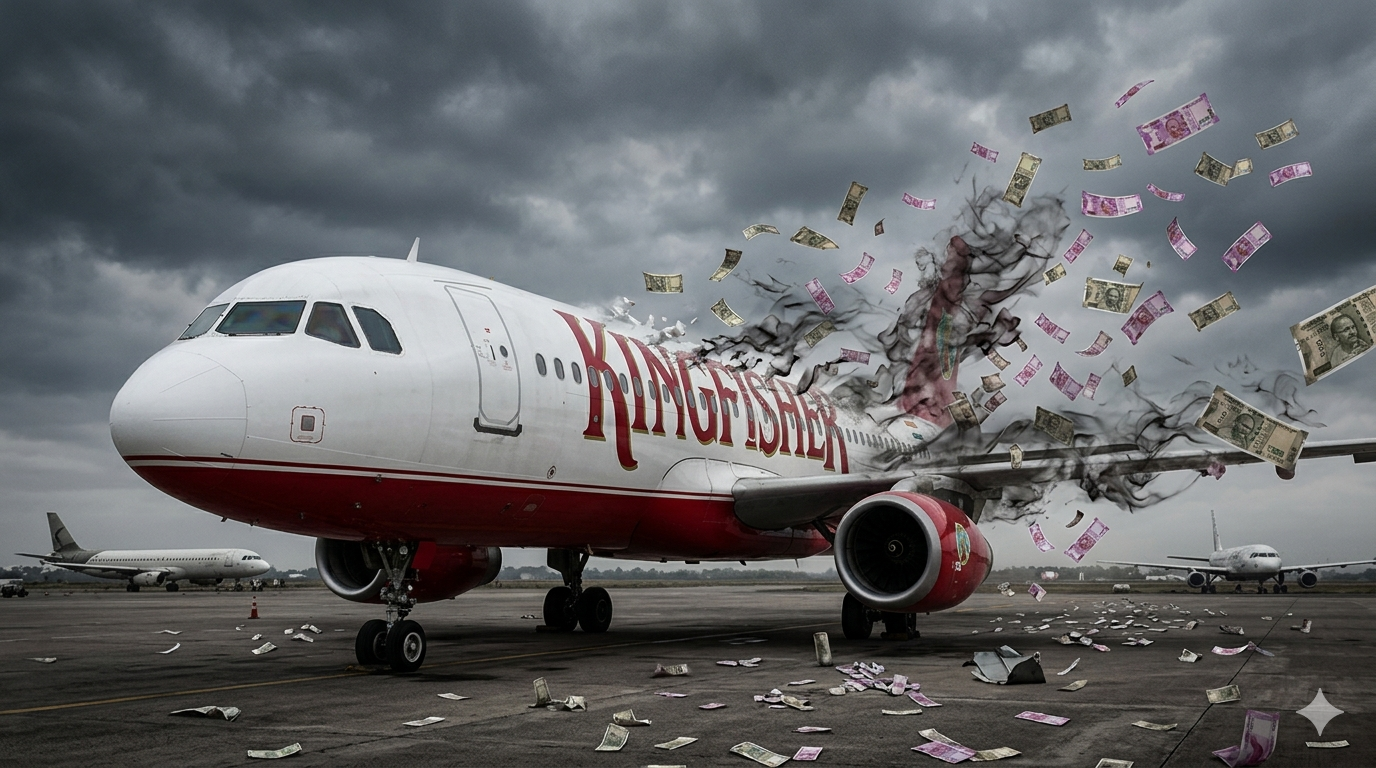
✈️ The Airline That Promised “Good Times”
Once upon a time, India had an airline that wasn’t just a way to fly — it was a way to be seen.
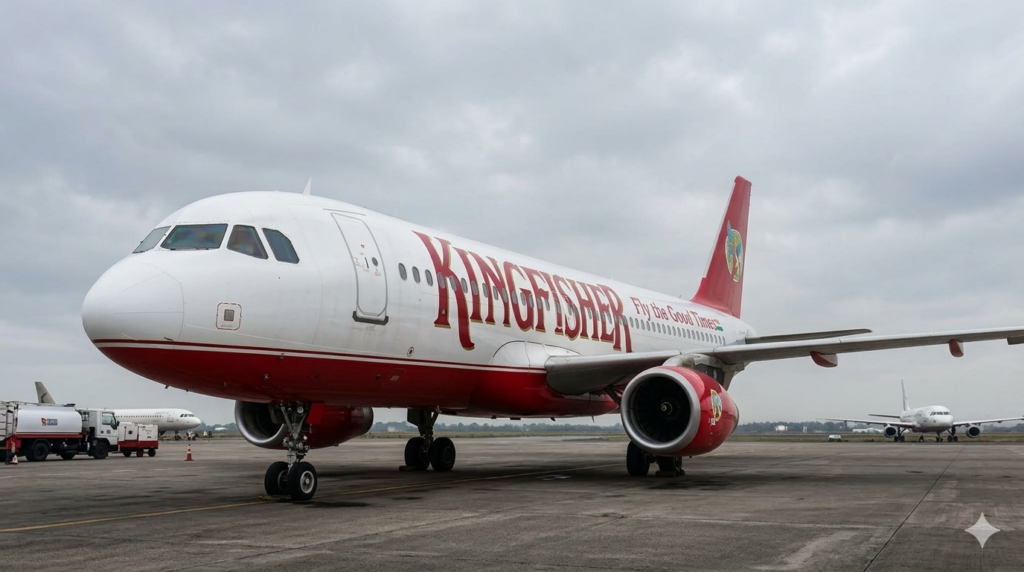
Kingfisher Airlines launched in 2005 with one mission: to make flying feel like a five-star hotel in the sky. Champagne, gourmet meals, personalized entertainment — the works.
It wasn’t about air travel; it was about the experience.
The airline’s tagline, “Fly the Good Times,” reflected both its founder’s personality and its promise. But within a few years, those good times came crashing down — leaving behind billions in unpaid debt, thousands of jobless employees, and one of the most infamous business collapses in Indian history.
👑 The Rise of the “King of Good Times”
Before he became the face of financial scandal, Vijay Mallya was India’s poster boy for flamboyant success.
He inherited the United Breweries Group at just 28 and turned Kingfisher Beer into a household name. His success in liquor, sports, and business earned him the nickname “The King of Good Times.”
Mallya’s lifestyle was part entrepreneur, part showman. Private jets, vintage cars, yachts, horses, Formula 1 teams — he lived as if excess were a strategy.
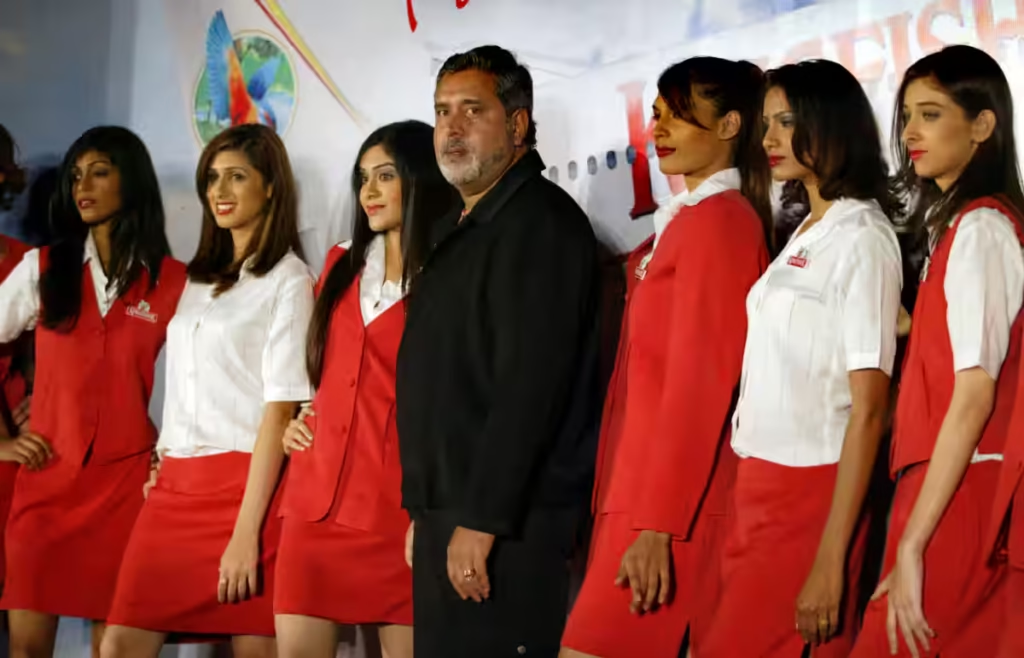
When he decided to start an airline, it wasn’t about tapping into aviation growth — it was about redefining it.
“Why should flying be boring?” he asked. “Let’s make it something Indians look forward to.”
Kingfisher Airlines was his answer.
💎 Launching a Luxury Airline in a Budget Market
In May 2005, Kingfisher Airlines took to the skies. It was everything India’s other airlines weren’t — sleek, sensual, and unapologetically premium.
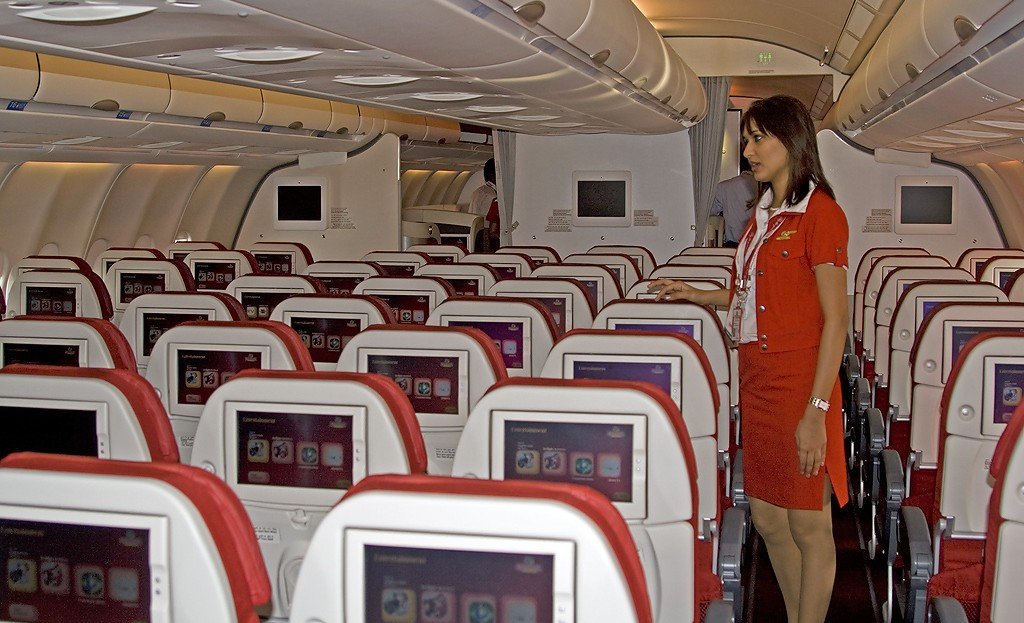
Passengers were greeted with smiles, served fine food, and entertained mid-air — something unheard of in Indian domestic flights then.
Every detail screamed luxury. Even the uniforms were designed by top fashion houses.
Kingfisher was an instant hit among celebrities, executives, and anyone who wanted to feel rich for an hour.
But luxury costs money. And Mallya was burning through it faster than his planes could fly.
💰 The Price of Perfection
Kingfisher’s problem wasn’t lack of popularity — it was economics.
The airline offered the best service in a market that wanted low-cost travel. Its competitors — IndiGo and SpiceJet — were ruthlessly efficient. They sold affordable tickets, skipped the frills, and kept their costs lean.
Kingfisher did the opposite. From free meals to costly entertainment systems, everything was designed to impress, not save.
The result?
- High operational costs
- Low ticket revenue
- Thin margins
- No long-term sustainability
It was like trying to sell Rolex watches in a market obsessed with discounts.
⚖️ The Air Deccan Gamble
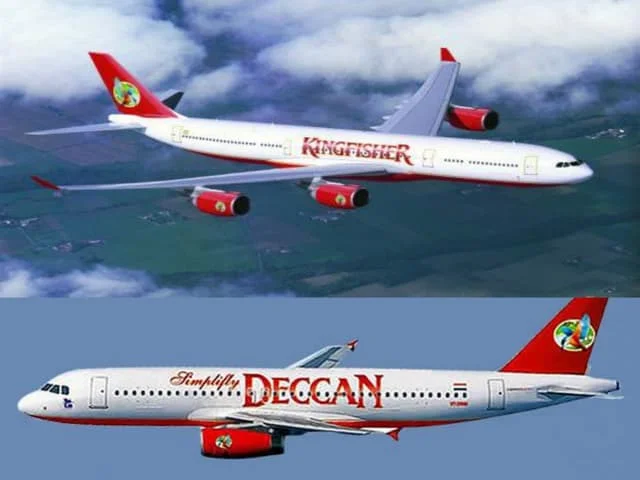
In 2007, Mallya decided to buy Air Deccan, India’s first budget airline.
The logic was simple: Kingfisher could enter the low-cost market and instantly double its routes.
But what looked smart on paper became a management nightmare.
Air Deccan was already losing money. Combining a luxury brand with a budget carrier confused customers and investors alike.
Was Kingfisher a premium airline or a budget one?
The merger drained resources, created operational chaos, and muddled the brand identity. Kingfisher was now bleeding red ink — and not just in its logo.
🌍 When the World Economy Hit Turbulence
Then came 2008.
The global financial crisis struck just as Kingfisher was expanding. Oil prices soared. The rupee weakened. Air travel demand fell.
Kingfisher, with its luxury-heavy cost structure, couldn’t keep up.
By 2011, the company had piled up over Rs 9,000 crore in debt. Flights were being grounded. Salaries went unpaid for months.
The same airline that once symbolized luxury now represented loss and chaos.
In October 2012, DGCA suspended Kingfisher’s flying license.
The “good times” were officially over.
📉 Counting the Ruins
By the time Kingfisher shut down in 2012, here’s what the balance sheet looked like:
| Creditor Type | Amount Owed (Approx.) |
|---|---|
| Banks (SBI-led consortium) | ₹7,000+ crore |
| Employees | ₹300 crore |
| Oil companies & airports | ₹1,200 crore |
| Aircraft lessors | ₹1,000 crore+ |
By 2025, including penalties and interest, total dues exceeded ₹17,000 crore.
Even after asset seizures and recoveries, about ₹7,000 crore remains unpaid — a number that’s become synonymous with Kingfisher’s failure.
⚖️ From Airports to Courtrooms
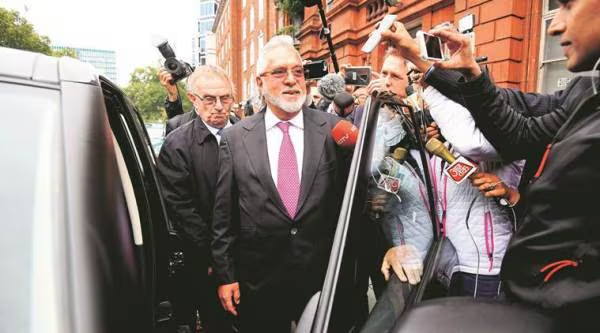
The financial collapse quickly turned into a legal avalanche:
- 2011: Service Tax Department froze Kingfisher’s accounts.
- 2012: Warrants for bounced cheques.
- 2013: CBI investigated IDBI’s ₹950 crore loan to the airline.
- 2015: Mallya was ousted from United Spirits.
- 2016: He left India quietly — just before his passport could be impounded.
Soon, Interpol issued a Red Corner Notice, and the Enforcement Directorate launched a money-laundering probe.
Mallya became a symbol of India’s frustration with corporate impunity — the billionaire who “fled with public money.”
🎙️ “I Am Not a Chor” — Mallya Breaks His Silence
In 2025, Mallya resurfaced on a three-hour podcast with Raj Shamani — his first long interview in years.
He denied wrongdoing, blaming the 2008 crisis and rising fuel costs for Kingfisher’s collapse.
“I am not a chor,” he said firmly. “I built an airline that India should be proud of.”
He claimed to have made several repayment offers that were rejected by banks.
There was remorse — but not full responsibility.
🇬🇧 Life After the Fall
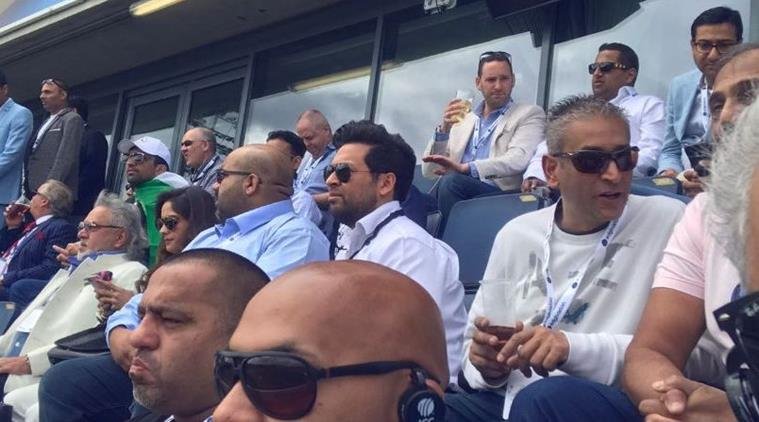
As of 2025, Mallya continues to live in the UK, on bail, as extradition and asylum proceedings stretch on.
He tweets occasionally about cricket, festivals, or his IPL team, Royal Challengers Bangalore (RCB) — especially after RCB finally won their first IPL title in 2025.
Meanwhile, the former employees of Kingfisher continue to struggle. Many never received their dues. For them, “good times” remain a bitter memory.
🧩 Lessons from the Collapse
Kingfisher’s fall is more than just a business story — it’s a blueprint of what not to do.
1. Branding Can’t Outsmart Bad Math
Great marketing can get you noticed, but it can’t fix flawed economics. Kingfisher sold dreams, but the books didn’t add up.
2. Ego Is Not a Business Strategy
Mallya’s personality built the brand — and destroyed it. Decisions made to impress rather than to sustain rarely end well.
3. Mergers Need Management, Not Just Money
The Air Deccan merger showed what happens when growth outpaces structure. Without integration, expansion is just chaos at scale.
4. Cash Flow Is the True King
In aviation, cash flow isn’t everything — it’s the only thing. When you can’t pay for fuel, your wings are clipped.
5. Accountability Is Leadership
When things go wrong, leaders don’t disappear. Kingfisher’s employees deserved answers, not silence.
🏦 A Mirror for Corporate India
Kingfisher’s fall exposed the fragility of India’s early-2000s corporate boom — a time when ambition was often mistaken for strategy.
Banks lent freely, investors cheered risk, and regulators looked away. Mallya’s empire was built on optimism, not oversight.
When it all collapsed, India learned a hard truth: glamour doesn’t guarantee governance.
🕊️ Legacy of a Fallen King
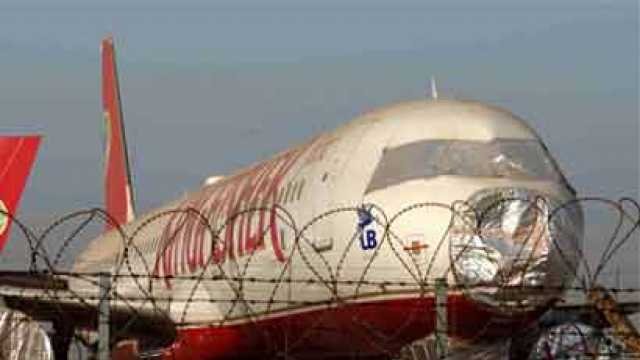
Even today, Kingfisher evokes nostalgia. For a brief, shining moment, it made Indians believe that air travel could be beautiful.
But beauty without discipline crashes fast.
For entrepreneurs, Kingfisher’s story is a cautionary tale:
- Dream big, but ground those dreams in numbers.
- Build charisma, but also credibility.
- Fly high — but watch your altitude.
Because in business, as in aviation, gravity always wins.
Disclaimer: This article is for informational and educational purposes only. It should not be construed as investment advice or a recommendation to buy or sell any security. Investors should conduct their own due diligence and consult with qualified financial advisors before making investment decisions. All data and information cited are based on sources believed to be reliable as of the publication date, but their accuracy is not guaranteed.
