


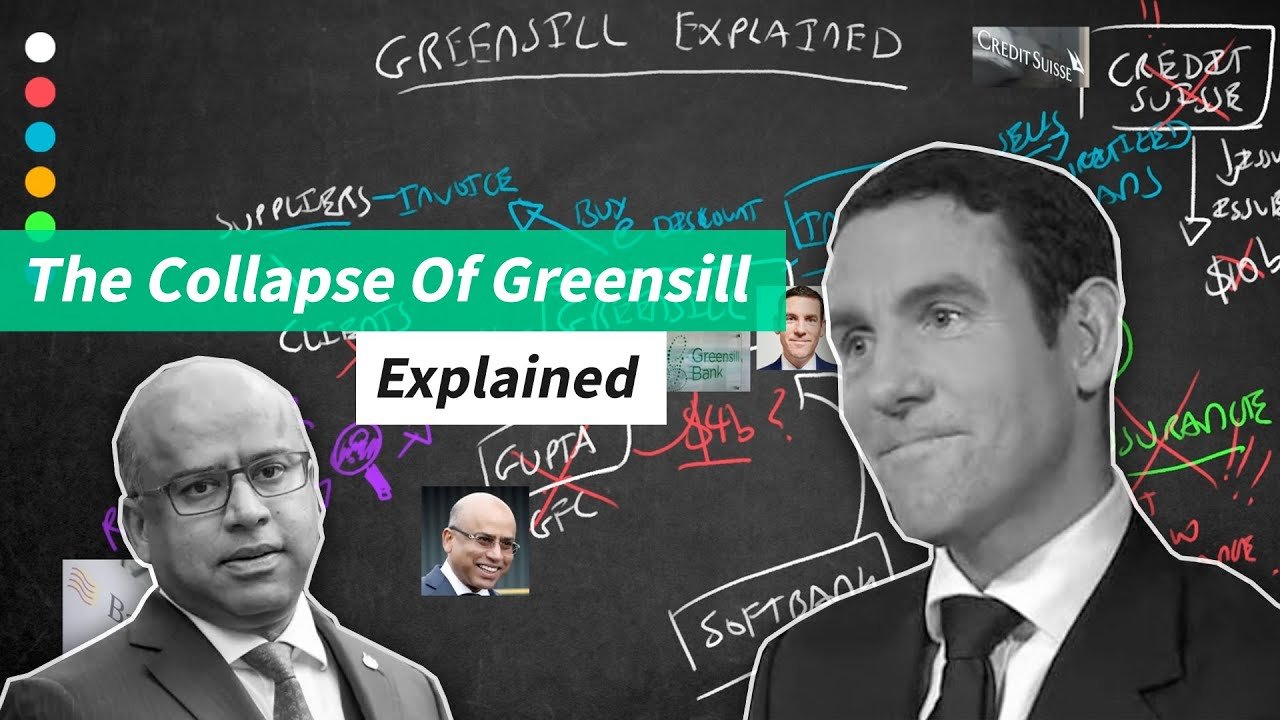
In March 2021, a little‑known specialist lender called Greensill Capital collapsed almost overnight. Within days, Credit Suisse froze and began winding down $10 billion of supply‑chain finance funds that had been built almost entirely on Greensill‑originated loans. At the same time, Sanjeev Gupta – an ambitious steel magnate once hailed as the “saviour of steel” – saw his GFG Alliance empire plunged into crisis, as his main lender suddenly disappeared.
What looked at first like a niche blow‑up in an obscure corner of “supply chain finance” has, over time, revealed something much bigger: a web of opaque financing, concentration risk, weak governance and mis‑sold “safe yield” products that contributed to the eventual downfall of one of Europe’s most storied banks, Credit Suisse.
For investors, this saga is not just about three names – Gupta, Greensill, and Credit Suisse. It is a case study in how complexity and clever engineering can hide very old‑fashioned risks – and how those risks can ultimately land on the balance sheets and portfolios of ordinary clients.
This is the story of how that business collapsed, and what it means for anyone who cares about risk, due diligence and long‑term investing.
The Big Idea: Supply Chain Finance, Supercharged
To understand the collapse, we need to start with the core product at the heart of it: supply chain finance.
What supply chain finance is supposed to do
In its plain‑vanilla form, supply‑chain finance is fairly simple:
- A supplier sells goods to a large buyer (say, a retailer or manufacturer).
- Instead of waiting 60–90 days to be paid, the supplier sends the invoice to a financier.
- The financier pays the supplier quickly (minus a small discount) and then collects full payment later from the buyer.
This helps suppliers with cash flow and working capital. Traditionally, banks and factoring companies have done this for decades.
What Greensill claimed to do differently
Greensill Capital, founded by Australian financier Lex Greensill, tried to turn this around:
- It positioned itself as a tech‑enabled, data‑driven supply‑chain finance platform.
- It packaged large volumes of these short‑term invoices into notes, which were then sold on to investors as ultra‑safe, yield‑enhancing fixed‑income products.
- To make these securities even more attractive, they were wrapped with credit insurance – if borrowers defaulted, insurers would, in theory, cover losses.
Credit Suisse became a major distribution partner:
- Through its asset‑management arm, the bank launched four supply‑chain finance funds that bought Greensill‑originated notes.
- At their peak, these funds managed about $10 billion in assets, marketed to private‑banking and institutional clients as low‑risk alternatives to cash and short‑term bonds.
On the surface, it looked like a win‑win: corporates got cheap working‑capital financing, Greensill earned fees, Credit Suisse earned fees, and investors got slightly higher yields than money‑market funds, supposedly with insurance backstops.
Underneath, however, serious problems were building.
Enter Sanjeev Gupta: The Steel Tycoon at the Centre of the Web
Sanjeev Gupta, an Indian‑origin UK‑based entrepreneur, built the GFG Alliance – a loose federation of steel, aluminium, energy and trading companies – by acquiring distressed industrial assets around the world. His Liberty Steel group bought struggling plants in the UK, Europe and Australia, often presenting Gupta as a saviour of jobs and local industry.
How Greensill became GFG’s lifeline
GFG’s rapid expansion required enormous financing. Traditional banks were often wary of the group’s opaque structure and leveraged profile. Greensill, by contrast, was willing to provide billions:
- Reports suggest Greensill’s exposure to Gupta‑linked entities reached £3.5 billion, largely through supply‑chain finance structures.
- Many of these deals involved invoices that were “prospective” or “future receivables” – financing based on expected, not yet existing, trade flows – pushing the boundaries of traditional supply‑chain finance.
This concentration was a red flag:
- According to later investigations and media reports, Greensill’s loans to GFG Alliance represented a substantial portion of its total exposure, far beyond what a diversified lender would normally tolerate.
- Credit Suisse’s internal risk teams had also highlighted the high concentration of GFG‑related assets inside the supposedly diversified supply‑chain funds.
Meanwhile, GFG looked increasingly fragile:
- It relied heavily on Greensill and short‑term financing to run long‑cycle, capital‑intensive steel and metals businesses.
- When Greensill collapsed, GFG suddenly faced a funding vacuum – exposing the underlying weakness of its business model.
The Insurance Time Bomb and the March 2021 Meltdown
The immediate trigger for Greensill’s downfall was not a big borrower default, but the withdrawal of insurance coverage on its loans.
Insurance pulled, house of cards exposed
- Greensill’s model depended on insurers like Tokio Marine providing cover for billions in credit risk.
- In early 2021, crucial insurance policies were not renewed or were challenged, undermining the entire edifice.
- Without insurance, the securities Greensill had originated – including those sitting inside Credit Suisse’s funds – were suddenly far riskier than advertised.
On 1 March 2021, Credit Suisse:
- Froze redemptions in its $10 billion supply‑chain finance funds, citing “valuation uncertainty” after insurance lapsed and Greensill’s situation deteriorated.
- Began moves to liquidate the funds and return cash to investors over time, as and when underlying exposures were repaid or recovered.
Greensill Capital, unable to secure alternative financing or insurance, quickly filed for insolvency. A specialist finance outfit that only months earlier had talked about an IPO was suddenly gone.

The scale of investor exposure
- By April 2021, Credit Suisse said it had recovered about $5.4 billion for fund investors, leaving $4.6 billion still at risk.
- Internal estimates suggested ultimate losses could reach up to $3 billion for investors in the funds, depending on recovery outcomes.
Over the next two years, as assets were liquidated and settlements reached with certain borrowers (for example, a deal with Bluestone Resources for up to $320 million), Credit Suisse continued returning money.
By late 2022, it had fully wound up at least one of the four funds, returning about 99.7% of net asset value for that particular vehicle. Others, especially those more exposed to problematic borrowers like GFG and Katerra, were slower and more contentious.
Fallout for Gupta and GFG: Investigations and Legal Pressure
With Greensill gone, GFG Alliance’s fragile funding model was exposed.
Serious Fraud Office investigation
In May 2021, the UK Serious Fraud Office (SFO) announced that it was investigating:
“suspected fraud, fraudulent trading and money laundering in relation to the financing and conduct of the business of companies within the Gupta Family Group (GFG) Alliance, including its financing arrangements with Greensill Capital UK Ltd.”
Key developments:
- In April 2022, SFO officers visited multiple Liberty Steel and GFG offices in the UK, seizing documents and demanding company balance sheets, annual reports and correspondence.
- The probe is ongoing, with the SFO confirming it remains a live investigation and offering victim/witness support resources.
Mounting legal and operational challenges
GFG’s troubles didn’t end with the SFO:
- A 2024 Companies House action in the UK saw Sanjeev Gupta prosecuted for failing to file accounts for over 70 companies, with potential fines or director disqualification on the table.
- Media reports and official commentary have highlighted numerous overdue filings across Liberty Commodities and Liberty Steel subsidiaries, coinciding with the Greensill‑triggered crisis.
- Separate legal battles, including a high‑profile unpaid wages and bonuses case in Dubai’s courts, have further exposed alleged governance and documentation lapses within Gupta’s empire.
While GFG has consistently denied wrongdoing and insists it is cooperating with investigators, the combination of:
- High leverage
- Opaque group structure
- Heavy reliance on one non‑bank lender (Greensill)
has turned what was once framed as an industrial‑revival story into a worrying example of financial fragility.
Fallout for Credit Suisse: From Greensill Funds to a UBS Bailout
For Credit Suisse, the Greensill saga was one of several scandals – alongside the Archegos hedge‑fund blow‑up – that badly damaged its reputation, balance sheet and regulatory standing.
Immediate damage
- The bank’s asset‑management arm had sold Greensill‑linked supply‑chain finance funds to clients as a relatively safe, short‑duration product, often underplaying the underlying credit and concentration risks.
- When Greensill collapsed and the insurance backstop disappeared, Credit Suisse was forced to:
- Freeze and then liquidate the funds
- Manage client anger and potential legal claims over mis‑selling and risk disclosure
- Take provisions and absorb related losses
By 2021–2022, Credit Suisse:
- Estimated its losses and provisions from Greensill‑related issues at around 1.6 billion Swiss francs, alongside Archegos‑driven hits.
- Warned that litigation and asset‑recovery efforts could take up to five years, with some investors likely not to recover fully.
Deeper governance failures revealed
Subsequent revelations made things worse:
- Regulatory documents and internal messages, disclosed in later litigation and investigations, showed that Credit Suisse risk teams had raised concerns about Greensill exposures and GFG‑related concentrations as early as 2018, but these were not adequately acted upon.
- A 2025 report from Switzerland’s financial regulator (Finma), cited in London court proceedings, accused former Credit Suisse executives of misleading the bank and regulators about Greensill‑linked risks and controls.
- A 2025 investigative piece noted that internal warnings about the level of discretion granted to Greensill and the ties to Sanjeev Gupta’s steel empire were repeatedly downplayed, even as exposure grew.
In short, this was not just a case of “bad luck.” It was a case of ignored red flags and governance failure.
The SoftBank / Katerra lawsuit loss
One of the most visible Greensill‑related legal battles involved a $440 million claim against SoftBank Group, tied to loans Greensill had extended to Katerra, a SoftBank‑backed US construction firm.
- Credit Suisse alleged that Greensill, at SoftBank’s urging, had relinquished rights to Katerra’s debts in exchange for shares, which later left noteholders (including its funds) short by $440 million.
- In October 2025, a London court rejected the lawsuit, with the judge finding that SoftBank had acted in good faith and was not liable to compensate Credit Suisse for those losses.
This was a double blow:
- It undercut efforts to recover money for supply‑chain fund investors.
- It kept the Greensill story alive in the public eye, highlighting how complex, relationship‑driven deals can go badly wrong for end investors.
From scandal to extinction
Greensill was not the sole cause of Credit Suisse’s demise, but it was a significant accelerant:
- The repeated governance failures, multimillion‑dollar losses, and client‑trust damage from Greensill and other scandals contributed to a crisis of confidence.
- In 2023, after a run of deposit outflows and market scepticism, Credit Suisse was forced into a state‑supported takeover by rival UBS, ending its 167‑year history as an independent bank.
For a global bank to be felled partly by a niche product it had marketed as safe is a powerful warning sign.
What Really Went Wrong: Patterns Behind the Collapse
Leaving aside the details, several recurring patterns emerge from the Gupta–Greensill–Credit Suisse story.
1. Dangerous concentration disguised as diversification
- Greensill advanced billions to a small number of clients (notably GFG Alliance), yet those exposures were sliced and packaged in ways that made them look diversified to end investors.
- Credit Suisse’s supply‑chain funds held large chunks of loans to related entities but were marketed as broadly diversified, short‑term credit portfolios.
For investors, a key lesson is to look beyond labels (“multi‑borrower,” “diversified”) and understand actual borrower and sector concentrations.
2. Complexity used as a selling point
- Structures like “future receivables” financing, insurance‑wrapped notes, and off‑balance‑sheet vehicles were pitched as innovation.
- In reality, they made it harder for investors (and sometimes even internal risk teams) to see who ultimately bore the risk and what triggered a cascade.
When products are too complex for you to sketch on a page – or for your advisor to explain clearly – that complexity itself is a risk.
3. Over‑reliance on insurance and external validation
- Greensill and Credit Suisse leaned heavily on insurance policies and big names (like SoftBank‑backed borrowers) to legitimise risky exposures.
- When insurers questioned the validity of cover, the entire structure wobbled. Once cover lapsed, the supposedly low‑risk product suddenly became high‑risk.
Insurance doesn’t transform a bad loan into a good one; it only shifts who pays if things go wrong. If the underlying underwriting is weak, the structure becomes brittle.
4. Governance and culture failures
- Internal concerns at Credit Suisse were flagged but not escalated effectively; business lines under pressure for fees and growth lobbied to maintain the Greensill relationship.
- GFG’s lax accounting and repeated filing failures, later subject to prosecution, suggest a weak control environment at a core borrower.
When governance is weak – both at the borrower and the lender – it’s only a matter of time before something breaks.
Why This Story Matters to Everyday Investors
If you’re an Indian investor reading this, it might be tempting to think: “This is a strange Swiss‑UK‑Australian scandal. Why should I care?”
There are at least four reasons.
1. “Safe yield” products deserve extra suspicion
Credit Suisse sold Greensill‑linked funds as low‑risk, yield‑enhancing alternatives to traditional cash and bond funds. Many clients trusted the brand and didn’t dig into the details.
In India, too, we’ve seen episodes where:
- Credit funds with concentrated exposures (e.g., IL&FS, DHFL, Yes Bank, AT1 bonds, etc.) were sold as relatively safe, only to inflict losses when credit events occurred.
- “Structured” products and unlisted debt were marketed to HNIs as logical yield boosters without enough discussion of tail risk.
Lesson: If a product promises “almost the safety of cash, but with much higher yield,” your default reaction should be scepticism, not excitement.
2. Brand names do not eliminate risk
Many Greensill‑exposed investors took comfort in the Credit Suisse name and in the presence of large counterparties like SoftBank, Katerra or major insurers.
The reality:
- Even top‑tier institutions can mis‑sell, mis‑judge or mis‑govern.
- Big counterparties can (and do) default or dispute obligations.
Lesson: Always ask, “Who ultimately owes the money?” and “Who is on the hook if multiple layers fail?” not just “Which brand is packaging this?”
3. Governance is a first‑class investment factor
GFG Alliance’s difficulties – delayed accounts, SFO investigations, lawsuits – show how quickly a borrower’s credibility can swing from “saviour of steel” to “subject of fraud and money‑laundering probes.”
For equity and debt investors, especially in cyclical or leverage‑heavy sectors (infra, real estate, NBFCs, metals):
- Governance quality, transparency and timeliness of disclosures are as important as financial ratios.
- When management repeatedly misses filing deadlines, restructures opaque entities or faces regulatory scrutiny, it’s a red flag – even if numbers look good in the short term.
4. Complexity is optional; discipline is not
The ultimate irony: many Greensill‑fund investors were seeking incremental yield on top of already solid portfolios. A small number of simple, high‑quality bond funds or direct G‑sec holdings could have met their needs with far less downside risk.
As an individual investor, you almost never need complex structures. You need:
- Clear goals
- Sensible asset allocation
- Low‑cost diversified products
- Discipline through cycles
Everything else – from supply‑chain funds to synthetic credit notes – is optional.
Practical Takeaways for Your Own Investing
You don’t need to become an expert in supply‑chain finance or Swiss banking regulation. But you can extract a checklist from this saga.
Before you buy any “innovative” product, ask:
- What exactly does this product own?
- Who are the borrowers / underlying assets?
- Are they diversified or concentrated?
- What is the worst‑case scenario?
- If insurers walk away, if one large borrower defaults, if redemptions spike – who bears the loss?
- Am I being paid enough for these risks?
- A 1–2% extra yield is not worth a risk of permanent capital loss.
- Is this product simpler than my goals require – or more complex?
- If it’s more complex, why? Who benefits from that complexity?
When assessing companies (especially lenders and NBFCs), look for:
- Concentration risk: Are a few groups or sectors dominating the loan book?
- Governance track record: Have there been repeated RBI / SEBI / SFO / other regulator actions, forensic audits, delayed financials?
- Culture signals: Are whistleblowers heard or silenced? How are risk functions staffed and empowered?
And above all:
- Don’t outsource your entire risk assessment to a brand name.
- Don’t let a yield pick‑up of 1–2% blind you to a 50–100% loss risk.
- Do remember that in finance, as in engineering, simple structures usually fail more gracefully than complex ones.
Conclusion: A Cautionary Tale for the Age of Financial Engineering
The collapse of Greensill Capital, the distress of Sanjeev Gupta’s GFG Alliance and the reputational implosion of Credit Suisse form one of the most instructive financial stories of the last decade.
On one side, an ambitious entrepreneur built a global industrial empire on aggressive acquisition and complex financing. On another, a specialist lender stretched the definition of supply‑chain finance into riskier territory, relying heavily on insurance and a handful of large clients. On the third, a global bank hungry for yield and fees packaged these risks into products sold as safe to its wealthiest clients.
When a single piece – insurance – was removed, all three structures began to wobble. Regulators, courts and new owners are still untangling the fallout years later.
For individual investors, the lesson is simple but profound:
You don’t need ever‑more‑clever products to succeed. You need ever‑more‑consistent judgment.
If you stick to understandable investments, avoid concentration and “too good to be true” yield promises, and give as much weight to governance as to return projections, you dramatically reduce the odds of being caught in the next Greensill‑style collapse – wherever in the world it originates.
About Finovest: Finovest.co.in helps Indian investors decode complex global financial events and extract practical, behavioural lessons for building resilient, long‑term portfolios.
Disclaimer: This article is for informational and educational purposes only and is not investment, legal or tax advice. Information is based on publicly available sources believed to be reliable as of the date of writing, but accuracy and completeness are not guaranteed. Please consult a SEBI‑registered adviser before making investment decisions.
